
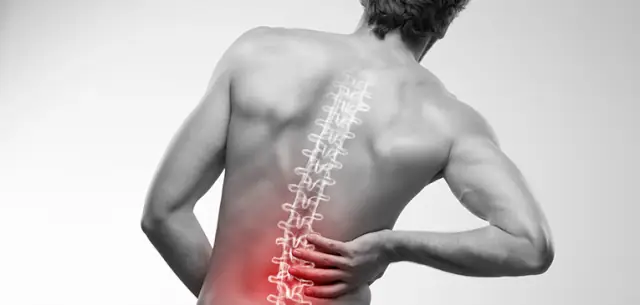
Herniated and Bulging Disc Care in Brentwood Bay
A disc injury can come on suddenly, during a lift or a sneeze, or build up over weeks of sitting and bending. Some people feel it mostly in the low back or neck; others get pain, tingling or numbness into a leg or arm. Many disc injuries improve with time and conservative care.
Our chiropractors in Brentwood Bay assess disc injuries in the lower back and neck, explain what the findings mean, and plan care around what your body tolerates now, with steady progress toward the activities you want back.
No referral needed. Online booking 24/7, or call the front desk and we will find you a time.







Understanding a Disc Injury
Discs sit between the vertebrae and act as tough, flexible spacers. Scan reports can sound alarming, so here’s what the common terms usually mean.
Bulge
The disc’s outer wall spreads a little beyond its usual edge. Bulges are common on scans of people with no pain at all.
Herniation
Some of the softer inner material pushes through the outer wall. It may irritate nearby tissues or press on a nerve root.
Mostly back or neck pain
Many disc injuries cause mainly local pain, often worse with sitting, bending forward or coughing.
Leg or arm symptoms
If a nerve root is involved, pain may travel into a leg (see sciatica) or into an arm and hand.
Age-related changes
Disc changes with age are normal and don’t always explain pain. We treat the person in front of us, not the report.
Signs That Need Urgent Attention
Go to the emergency department right away if you lose bladder or bowel control, notice numbness in the saddle area (groin, genitals, inner thighs), or have weakness in one or both legs that’s getting worse. These can be signs of cauda equina syndrome.
With a neck disc, get prompt medical care if you notice clumsiness in your hands, trouble with balance or walking, or weakness that’s spreading. Fever, unexplained weight loss or a history of cancer alongside spinal pain also need a doctor’s review. We’ll refer you if your exam points that way.
How We Approach Disc Care
- Find your easing positions. We look for movements and positions that reduce your pain or draw leg or arm symptoms back toward the spine, and build early exercises around them.
- Gentle hands-on care. Mobilization and, where appropriate, adjustment at levels above and below the injury, adapted to how irritable your symptoms are. We avoid techniques that provoke your symptoms.
- Soft tissue work. Easing protective muscle spasm in the back, hips or neck, with massage therapy added if it helps.
- Graded rehab. Exercise that moves from symptom relief to strength, then to the lifting, bending and sitting your life asks of you. Our Certified Athletic Therapist can help with the later stages, especially return to work or sport.
- Regular check-ins. We review progress as we go.
Disc injuries from a crash may be covered through ICBC, and injuries at work through WorkSafeBC. We bill both directly.
Day-to-Day Tips While a Disc Settles
Keep moving within comfort. Several short walks around Brentwood Bay village are usually easier on a sore disc than one long outing or a day on the couch.
Discs are often more sensitive first thing in the morning, so leave heavy bending until later in the day. In the garden, kneel or use a low stool, and break planting or weeding into short sessions.
When you sit at a desk or drive the Pat Bay Highway, support your lower back and get up regularly. Boaters should take care hauling lines or lifting gear from bent, awkward positions; bring the load close and use your legs.
Frequently asked questions
My MRI shows several bulging discs. Is that bad?
Not necessarily. Disc bulges are common in people without back pain, and the number on a report doesn’t predict how you’ll feel. We focus on your symptoms, exam and function.
Is chiropractic care appropriate with a herniated disc?
For most people, yes, when care is matched to the injury. Our chiropractors will choose gentle techniques suited to your symptoms and change the plan if anything flares.
How long does a herniated disc take to heal?
Many people improve noticeably over 6 to 12 weeks, though some take longer. Pain often eases before strength and confidence fully return, so rehab continues after the worst is over.
Can a disc injury be in my neck instead of my back?
Yes. Neck disc injuries can cause neck pain, pain near the shoulder blade, or symptoms into the arm and hand. Everyday stiffness without arm symptoms is covered on our neck pain page.
Should I wear a back brace?
A brace may make a few days more comfortable for some people, but long-term use can leave muscles less conditioned. We’d rather help you find comfortable ways to move and gradually build strength.
Will I need surgery for a herniated disc?
Most herniated discs don’t need surgery, and many are managed with conservative care such as manual therapy, exercise and education. Surgery is usually considered when there’s worsening weakness, loss of bladder or bowel control, or pain that doesn’t settle with conservative care. When it’s medically necessary, we refer for an orthopedic opinion based on our assessment and your response to treatment.




Ready to book in Brentwood Bay?
Open Monday to Saturday, 8:00am – 6:00pm. Direct billing to most extended health plans, ICBC and WorkSafeBC.