
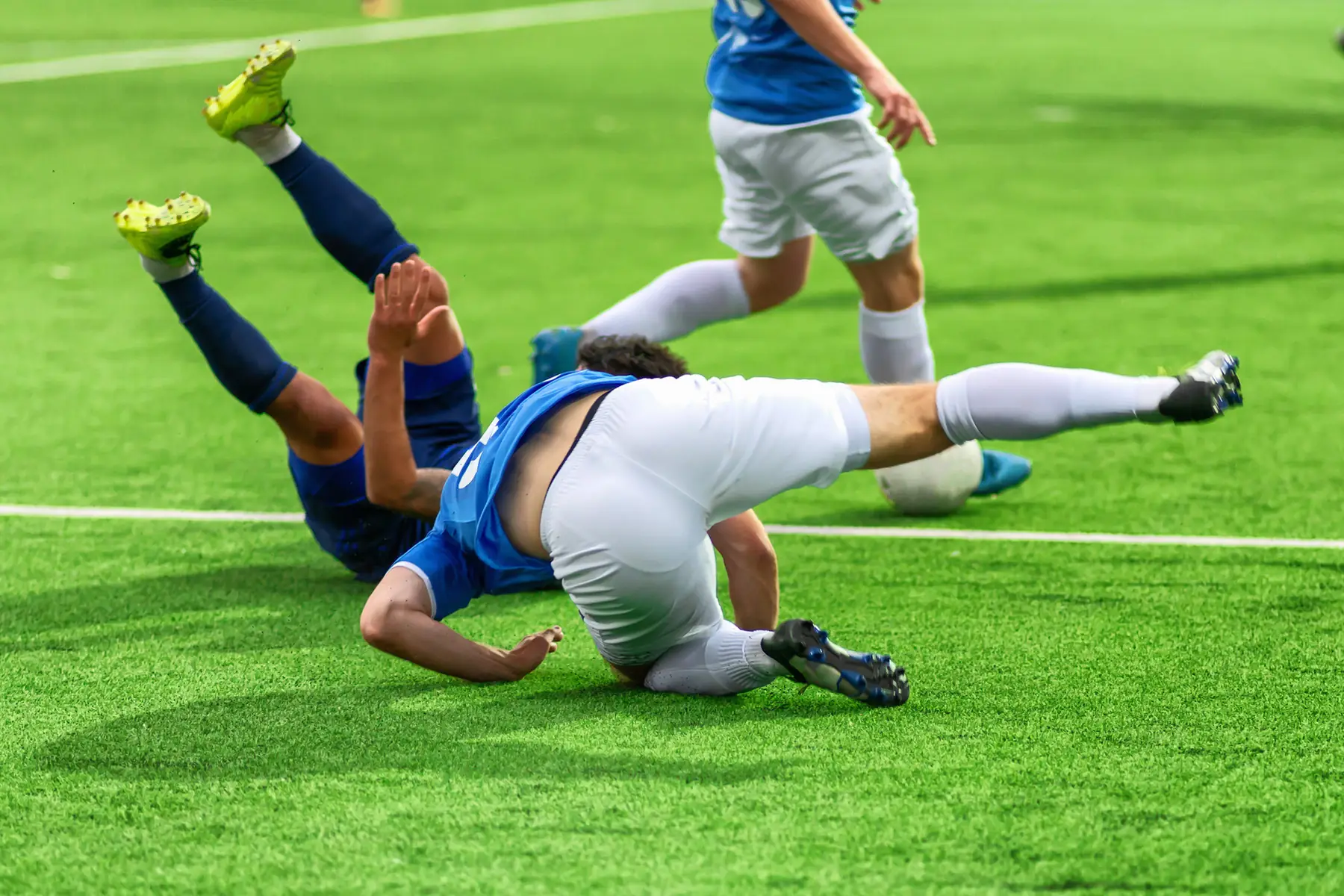
Sports Injury Care in Brentwood Bay
Most sports injuries fall into three groups: a sudden sprain or strain, an overuse problem that builds over weeks, or an old injury that keeps flaring. Each needs a slightly different plan, and the first step is working out which one you’re dealing with.
At Brentwood Chiropractic Group, chiropractors, a Certified Athletic Therapist and registered massage therapists share the care of sports injuries in one Brentwood Bay clinic. No referral is needed, and we’re open 6 days a week.
No referral needed. Online booking 24/7, or call the front desk and we will find you a time.








Three kinds of sports injury
Sudden injuries
A rolled ankle on a trail root, a hamstring that grabs in a sprint, a knee that twists in a tackle. These are sprains (ligaments) and strains (muscles and tendons). Early on, the aim is to protect the area while keeping the rest of you moving.
- Ankle and knee sprains
- Hamstring, calf and groin strains
- Shoulder and AC joint sprains
Overuse injuries
These creep up when training load rises faster than tissue can adapt – a new running plan, a long paddling weekend, a busy golf season. Pain often starts mild and gets louder.
- Achilles and kneecap tendon pain
- Tennis and golfer’s elbow
- Shin pain and heel pain
Recurring injuries
If the same ankle rolls every season or your calf strains every spring, something is usually left over: lost strength, poor balance or a movement habit. Finding that gap is a big part of the plan.
- Repeat ankle sprains
- Recurring hamstring strains
- Back pain that returns with training
Who does what on your injury
You won’t need all of these. Most people start with one practitioner, who brings others in if the injury calls for it.
| Practitioners | Role in sports injury care |
|---|---|
| Chiropractors | Assessment and diagnosis, joint mobilization and adjustment, soft tissue work, taping and early exercise |
| Certified Athletic Therapist, CAT(C) | Graded rehab, strength and balance work, return-to-sport testing and concussion assessment |
| Registered Massage Therapists | Soft tissue care for muscle tension and guarding while you rehab |
| Registered Acupuncturist | Acupuncture as one option some people use to manage pain during recovery |
Common injuries, and where to read more
Ankle sprains
Usually the outer ligaments. Balance and calf strength matter for lowering the chance of another one. See ankle sprain care.
Knee pain
Front-of-knee pain in runners and cyclists, and ligament sprains in field sports. See knee pain.
Achilles and heel
Common when mileage climbs or hills are added to a program. See Achilles tendinopathy.
Shoulder
Paddlers, swimmers and throwers load the rotator cuff hard, and it can complain when volume jumps. See shoulder pain.
Elbow
Racquet sports, golf and weekend gardening can all irritate the tendons around the elbow.
Head knocks
Any suspected concussion should be assessed before you return to play. See concussion care.
Getting back to your sport
Returning to play is a process rather than a date on the calendar. We usually progress from pain-calming care and gentle movement, to strength and control work, to drills that look like your sport. Our athletic therapy team often leads this stage and can run return-to-sport testing before you go back to full games.
For some long-standing tendon problems that haven’t settled with loading exercise, shockwave is offered at our Saanichton clinic – see shockwave therapy.
Frequently asked questions
Should I use ice or heat?
In the first day or two, many people find a cool pack eases a fresh sprain, and gentle heat often suits stiff muscles later on. Neither one heals the injury, so treat them as comfort tools and keep moving within what the injury allows.
How soon after an injury can I come in?
Right away. Early care can focus on protecting the injured area while keeping the rest of you moving. No referral is needed, we’re open Monday to Saturday, 8am to 6pm, and you can book online any time.
Do overuse injuries settle on their own?
Some do with a short break and a gradual return. Others hang around because the training pattern behind them hasn’t changed. If the pain has lasted more than a few weeks or keeps returning, an assessment is worthwhile.
Will I have to take time off my sport?
Not always. Many injuries allow modified training – a different drill, less volume, or cross-training on the bike or in the pool. We’ll help you decide what’s reasonable for your injury.
What if I got hurt at work or in a crash?
Tell us when you book. Workplace injuries can be billed to WorkSafeBC and crash injuries to ICBC, and we direct bill both.



Ready to book in Brentwood Bay?
Open Monday to Saturday, 8:00am – 6:00pm. Direct billing to most extended health plans, ICBC and WorkSafeBC.